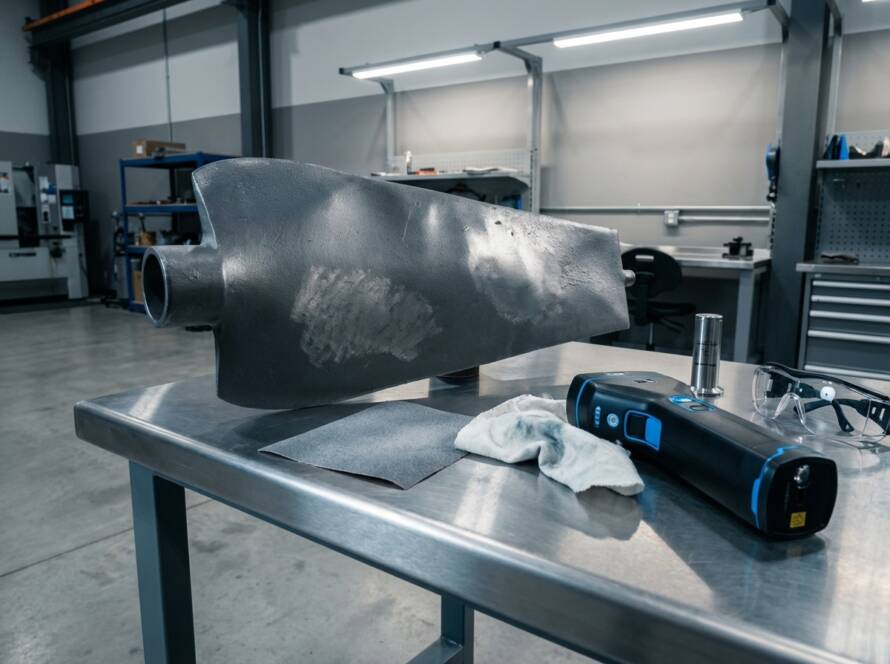
Starting a new CAD model from scratch can drain your project timeline and inflate costs without guaranteeing accuracy. Reverse engineering with scan-to-CAD often cuts those risks, delivering precise, ready-to-use models faster. In this post, you’ll learn eight clear signs that industrial 3D scanning in St. Louis is the smarter path for your next manufacturing or design challenge.
Benefits of Reverse Engineering
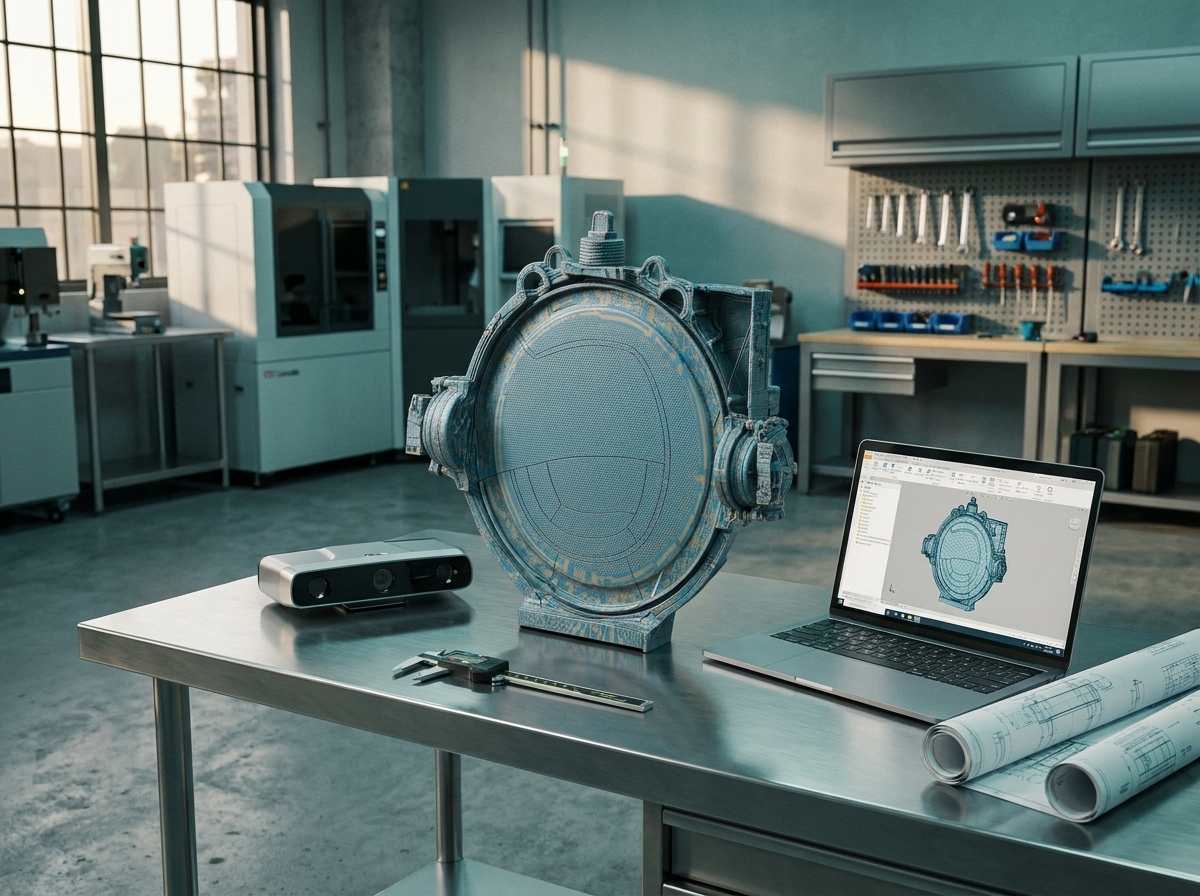
Reverse engineering offers a host of advantages that streamline the manufacturing process. Let’s explore these benefits in detail.
Faster Production Cycles
Imagine cutting down the time it takes to turn a concept into a finished product. Reverse engineering helps you achieve that by using advanced scanning tools. With 3D scanning, you can capture detailed measurements of existing parts. This means no more starting from zero with a new design. You’ll save time since the digital model can be quickly converted into a CAD format. This tool allows for faster iterations, letting you move from prototype to production much quicker. By using such methods, production timelines shrink, and your product hits the market sooner.
Accuracy in Complex Parts
Complex parts often challenge traditional inspection methods. However, reverse engineering tackles this with ease. Modern scanners can capture every detail, creating a digital twin of the object. This means you get a precise model that reflects every curve and angle. When accuracy is crucial, such as in the aerospace or automotive sectors, this method shines. By capturing exact dimensions, you ensure that parts fit perfectly during assembly. This accuracy guarantees that your products meet the highest standards of quality.
Lower Risk in Design Changes
Changing designs traditionally carries risk. What if the new design doesn’t work? Reverse engineering minimizes this risk. By scanning existing parts, you can easily adapt designs without starting from scratch. This flexibility means you can test new ideas quickly and without massive investment. If a change doesn’t work, simply revert to the original scan. In industries where design adjustments are frequent, like manufacturing, this approach is invaluable. It allows you to innovate while keeping risks low.
Practical Signs for Scan-to-CAD
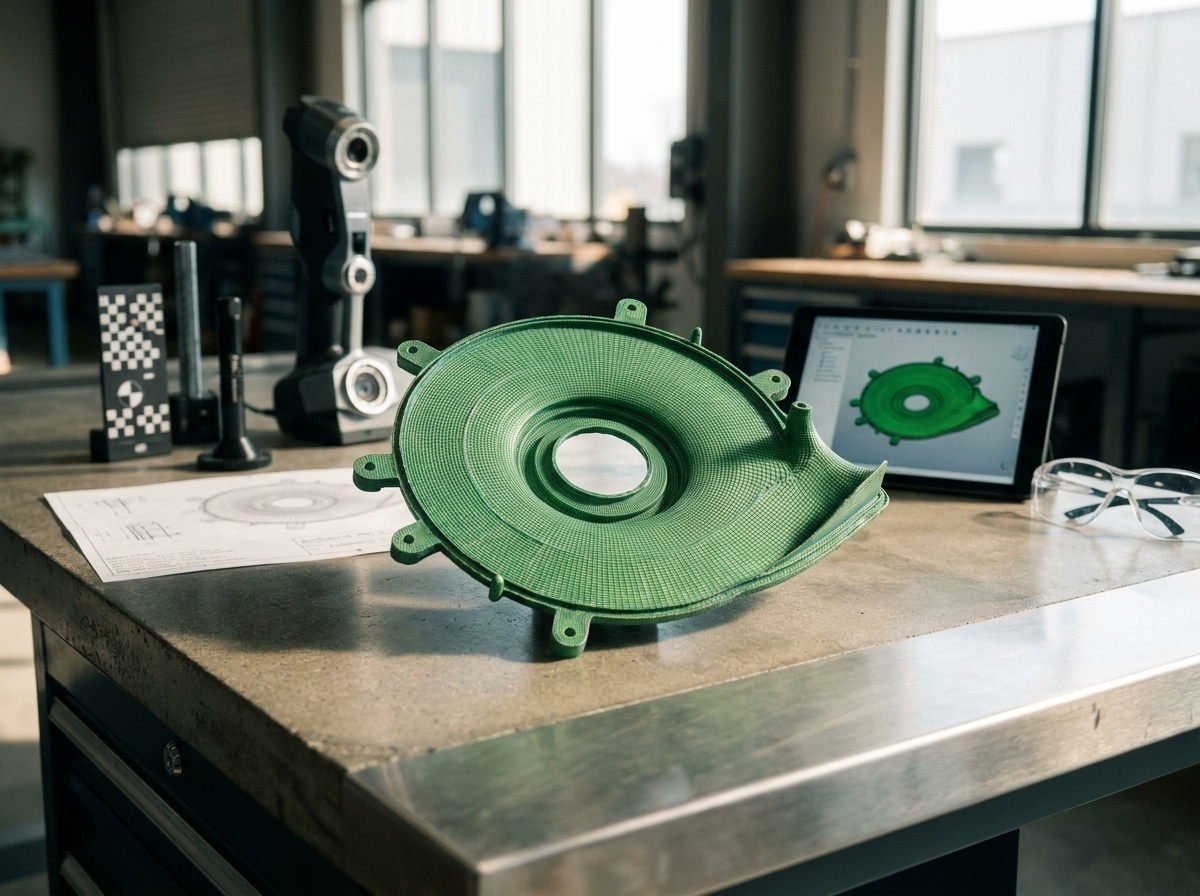
When is it time to consider scan-to-CAD? Here are clear indicators that this approach could benefit your project.
Legacy Parts and Obsolescence
If your project involves older parts, scan-to-CAD might be your best option. Many industries face challenges with legacy components that are no longer manufactured. Reverse engineering allows you to create digital replicas of these hard-to-find parts. This process ensures that even obsolete items can be reproduced accurately. By digitizing these parts, you ensure their availability for future needs, maintaining system functionality without delay.
As-Built Capture Needs
During construction or renovation, capturing the current state of a structure is essential. Scan-to-CAD makes this task straightforward. By scanning buildings, you gain precise digital models that reflect the “as-built” conditions. These models are crucial for planning renovations or ensuring that new additions fit seamlessly with existing structures. In the construction industry, having detailed as-built models reduces errors and enhances project planning.
Quality Inspection Demands
Quality inspection is vital in ensuring product standards. Scan-to-CAD plays a significant role here by providing detailed models that can be used for comparison. You can overlay scanned models with original CAD designs to spot deviations. This method ensures that manufactured parts meet exact specifications, maintaining high quality. Industries such as automotive and aerospace, where precision is essential, benefit greatly from such advanced inspection methods.
Choosing the Right 3D Scanning Tools
Selecting the right tools is crucial for successful scan-to-CAD processes. Here’s a look at some of the top options.
Comparing Artec Leo and Artec Ray II
Choosing between the Artec Leo and Artec Ray II depends on your project’s needs. The Artec Leo is perfect for handheld scanning, offering mobility and ease of use. It’s ideal for smaller objects requiring detailed attention. On the other hand, the Artec Ray II excels in capturing large areas. This scanner is suited for projects like scanning buildings or large machinery. Both options provide high precision, but the choice hinges on the scale and nature of your tasks.
The Role of SimScan E in Precision
For tasks demanding high precision, the SimScan E is a top choice. This scanner is compact yet powerful, capturing intricate details with ease. It’s especially useful for small parts needing meticulous attention, such as medical devices or intricate machine components. The SimScan E’s precision ensures that every scan reflects the true dimensions of the object. By using this scanner, you guarantee that your digital models meet the highest standards of accuracy.
Advantages of Terrestrial Laser Scanning
Terrestrial laser scanning offers unique benefits for large-scale projects. It’s ideal for capturing expansive areas quickly and accurately. This technology is often used in mapping and surveying, providing detailed terrain models. For construction projects, it ensures that every landscape feature is captured accurately, aiding in planning and execution. Its ability to cover large areas makes terrestrial laser scanning an indispensable tool in industries requiring comprehensive spatial data.