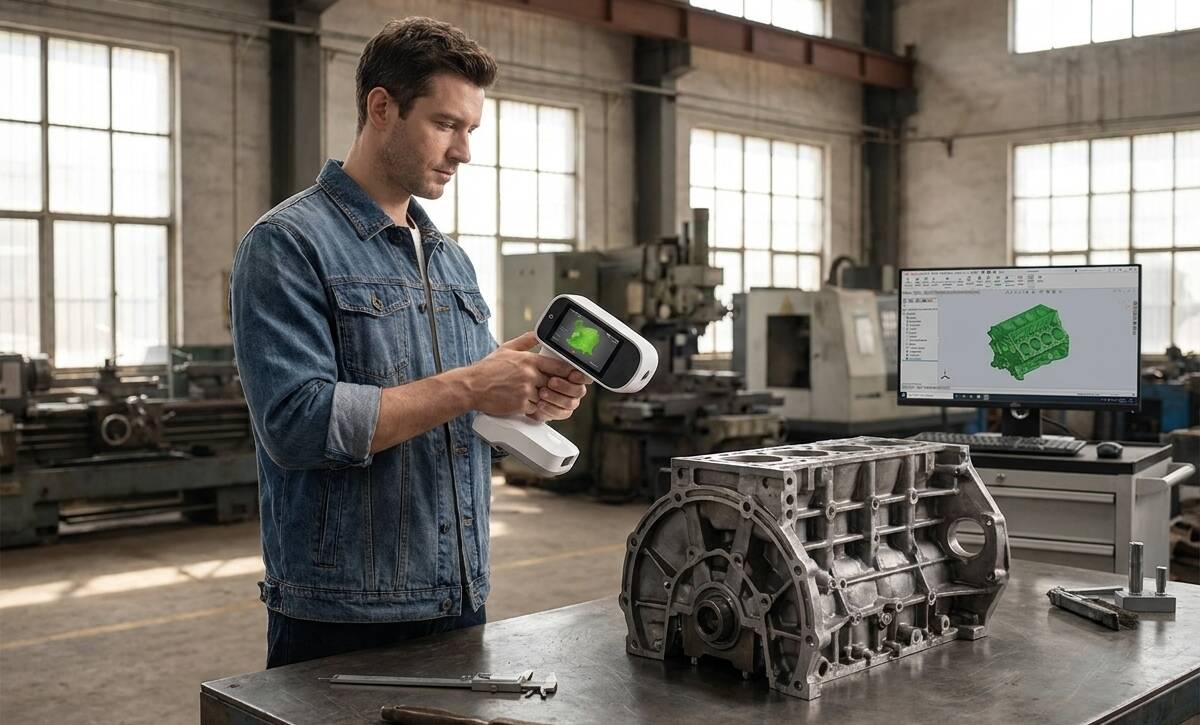
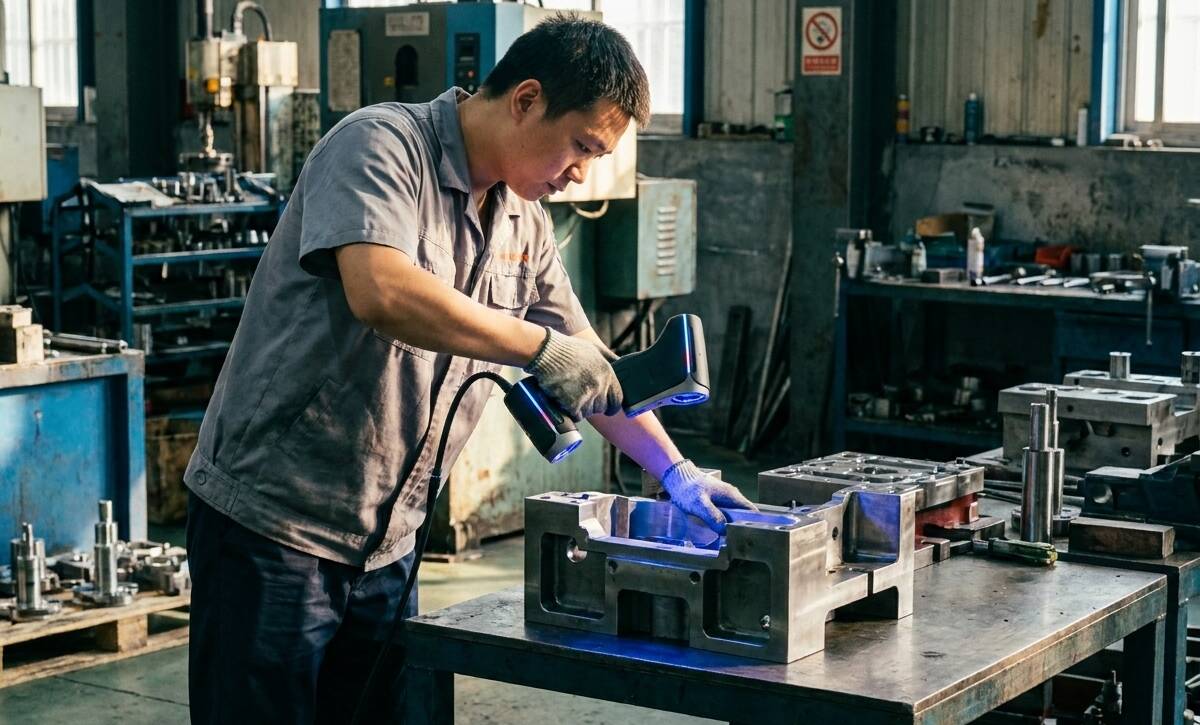
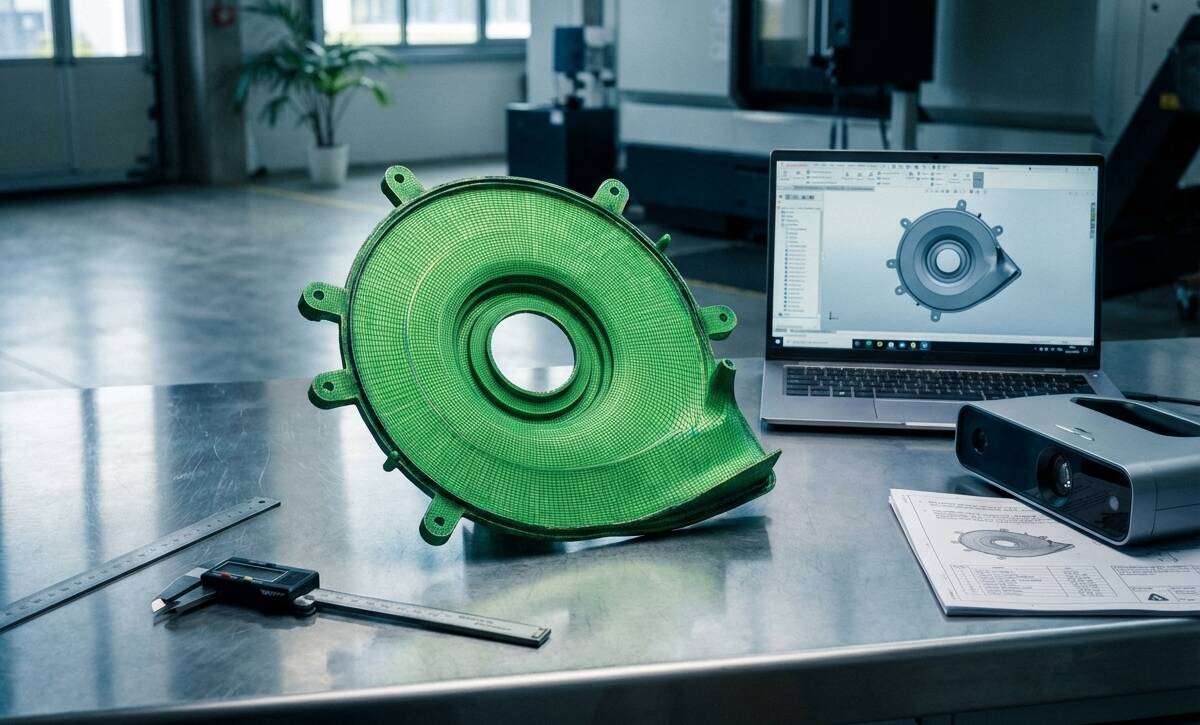
Reflective, dark, and textured surfaces challenge 3D scanners by distorting or absorbing light. Proper prep, tailored settings, advanced scanning, and metrology-grade tools ensure accurate data capture.
Proper 3D scanning prep—optimizing surface finish, geometry access, and fixturing—ensures accurate data capture, reduces occlusion, and improves CAD and inspection workflow efficiency.
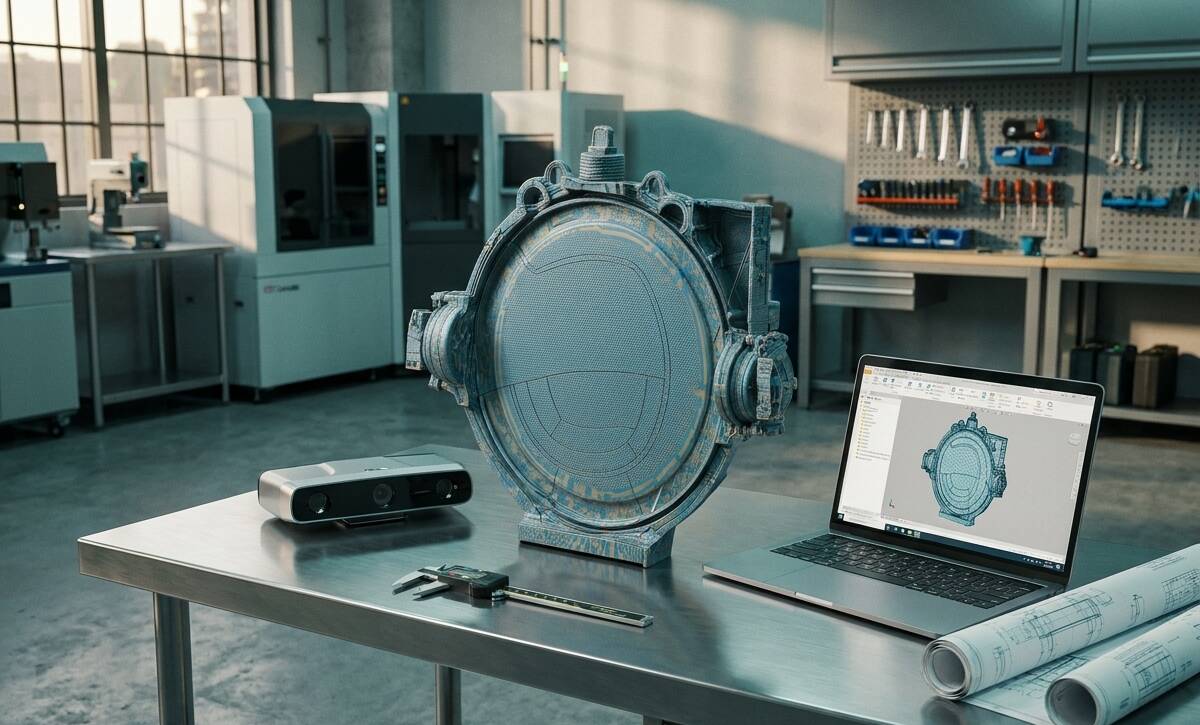
High-accuracy 3D scanning enables early detection of dimensional drift via deviation analysis and scan-to-CAD comparison, reducing scrap, preventing production delays, and ensuring quality compliance.
Scan-to-CAD reverse engineering accelerates legacy part digitization, reduces risks, and cuts costs in automotive, aerospace, and manufacturing by creating precise 3D models for efficient rebuilding.